Lead Like a Human
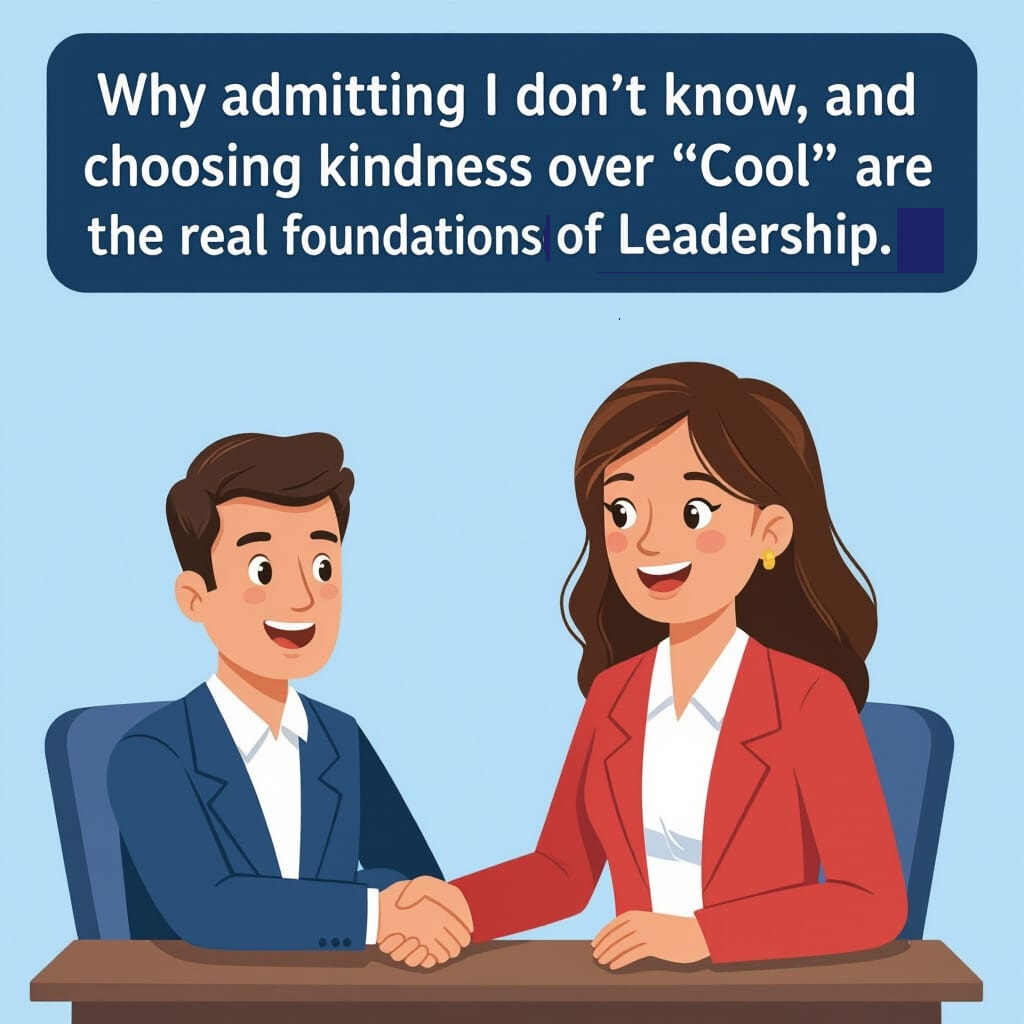
Why admitting “I don’t know,” and choosing kindness over “cool” are the real foundations of modern leadership

Leadership isn’t just about big titles, packed calendars, or making huge speeches to massive crowds. It’s about how you move through ordinary days, how you treat people, how you handle not knowing, and how you design your life in a way that feels true to you. It’s also about the kind of energy you bring into a room—and the kind of legacy you leave in people’s hearts after they’ve worked with you.
This article takes the theme of “Lead like a Human” and turns it into a down‑to‑earth guide to leading well, in work and in life.
1. The Power of Saying “I Don’t Know”
There’s a strange pressure that comes with leadership: the silent expectation that you should always have an answer. People look at you in meetings, wait for your opinion, and assume you’ve got everything figured out. That pressure can quietly push leaders into pretending—guessing, bluffing, or talking in circles—just to avoid saying three simple words: “I don’t know.”
But here’s the twist: “I don’t know” can actually be one of the most powerful things a leader ever says.
When you say:
“I don’t know—let’s talk it through.”
“I don’t know—what do you think?”
“Teach me how you see this.”
“Tell me what you mean. Help me understand.”
You’re not showing weakness; you’re showing confidence. You’re saying, “I trust myself enough to admit my limits, and I trust you enough to invite your thinking.” That’s real strength. It tells your team you’re human, open, and not ruled by ego.
Good leaders aren’t walking encyclopedias. They’re good listeners, good learners, and good collaborators. Being honest about what you don’t know creates space for others to step up, share their ideas, and feel like genuine partners rather than passive followers. Over time, this builds a culture where questions are welcome, curiosity is valued, and people dare to think out loud instead of staying silent in fear of being wrong.
2. Confidence That Includes Humility
There’s an important balance here: you don’t want a leader who shrugs at everything and says “no idea” all day. You also don’t want the opposite—someone who pretends to know everything and never listens. The sweet spot is confident humility.
Confident humility sounds like:
“Here’s what I do know, and here’s what I’m still figuring out.”
“I have some experience here, but I’d like to hear your view.”
“Let’s put our heads together on this.”
Leaders who operate like this feel safe to be around. You don’t have to perform in front of them. You don’t have to pretend you understand when you don’t. They make it okay to say “I’m not sure either,” because they’ve already shown that not knowing is part of the process, not a personal failure.
When people stop wasting energy trying to look perfect, they can finally use that energy to solve real problems. That’s when teams get smarter, faster, and more honest—simply because the leader was brave enough to say “I don’t know” first.
3. Designing Your Life Like a Leader
Leadership doesn’t start and end at the office door. It’s tied to how you build your whole life—how you make decisions, who you surround yourself with, and how you treat yourself when no one else is watching.
Think of “designing your life” as leading from the inside out. Some simple principles stand out:
Follow your intuition.
Grow with people who also want to grow.
Take responsibility.
Learn to forgive.
Stay kind, even when it’s hard.
These aren’t soft extras. They’re the inner work that allows you to lead without burning out, turning bitter, or passing your unhealed wounds onto everyone around you.
4. Following Your Intuition (And Why It Matters for Leaders)
In a noisy world full of opinions, hot takes, and constant advice, your intuition is that quiet inner compass that helps you sense what feels right or wrong for you. It’s not magic, but it is powerful—a mix of your experience, values, and deep knowing.
Leaders who ignore their intuition often:
Stay too long in roles or strategies that drain them.
Say “yes” to things that clash with their values.
Let fear or external pressure make all their decisions.
Leaders who listen to their intuition tend to:
Spot misalignment earlier.
Make choices that feel honest, not just convenient.
Build teams and projects that actually reflect what they care about.
Intuition doesn’t replace data or logic, but it sits alongside them. It’s the voice that says, “The numbers look okay—but something about this still feels off,” or “This opportunity scares me, but in a good way.” Leading well often means listening to that voice and being willing to act on it, even when it doesn’t please everyone.
5. Choosing People Who Want to Grow
Leadership is a lot easier—and a lot more meaningful—when you’re not dragging people who don’t want to move. One of the most important life and leadership decisions you can make is to surround yourself with people who also love to grow.
These are people who:
Own their mistakes instead of hiding them.
Are curious about feedback, not instantly offended by it.
Want to get better, not just look good.
When your team, friends, or partners have this mindset, everything changes. Difficult conversations become opportunities instead of battles. Challenges become shared puzzles instead of blame games. You don’t have to be the “motivational machine” all the time because others are already internally driven.
As a leader, you can encourage this by:
Praising effort and learning, not just polished outcomes.
Sharing your own growth edges openly.
Making reflection and improvement a normal part of the rhythm—not a rare panic response.
6. Healing as Part of Leadership
“Take responsibility for your healing” might sound like something from a self‑help book, but it’s deeply relevant to leadership. A lot of unhelpful behaviour at work—controlling, shutting down, lashing out, avoiding conflict—comes from old wounds and fears that were never really dealt with.
Leaders who refuse to look inward often:
React instead of respond.
Carry unresolved anger or insecurity into meetings.
Take things personally that were never meant that way.
Leaders who do inner work—therapy, reflection, journaling, coaching, honest conversations—begin to:
Notice their triggers and manage them more gently.
Apologise when they overreact, instead of doubling down.
Create environments where others don’t have to tiptoe around their moods.
Healing doesn’t mean becoming perfect or never getting upset. It means being awake to what’s happening inside you so you don’t unconsciously put it on everyone else. When you take responsibility for your healing, you break the chain: your past stops quietly controlling your present, and you lead from a calmer, clearer place.
7. Learning to Forgive (Yourself and Others)
Leaders are going to see a lot of mistakes—both their own and other people’s. If you don’t learn to forgive, you end up carrying around a heavy bag of resentment, self‑blame, and “I should have known better” thoughts. That weight eventually leaks into your tone, your decisions, and your relationships.
Forgiveness doesn’t mean pretending something didn’t hurt or saying it didn’t matter. It means:
Acknowledging what happened honestly.
Owning your part, if you had one.
Letting go of the need to replay it forever.
Forgiving others frees your energy. Forgiving yourself makes it possible to keep growing instead of staying stuck in one bad moment or season. Leaders who can say, “Yes, that was hard, and I’d do it differently now—but I won’t let it define the rest of my story,” are much more able to move forward with clarity and kindness.
8. Staying Kind in a World That Rewards “Cool”
One of the most beautiful sections in your text is the “wish” that you have the courage to be warm in a world that would rather you be cool. That’s such a powerful leadership idea.
“Cool” often means detached, ironic, unbothered, and emotionally distant. It can look impressive from a distance, but it rarely feels good up close. Warmth can look softer, but it’s actually much braver: it means you choose to care, to be sincere, to show appreciation, to risk being seen as “too much” rather than not enough.
Kindness in leadership looks like:
Actually listening when someone talks, not just waiting for your turn.
Saying “thank you” specifically and often.
Giving people the benefit of the doubt instead of assuming the worst.
Being willing to show empathy, even when you still have to hold a boundary.
Kind doesn’t mean weak. You can be warm and still hold people accountable. You can be gentle and still be clear. The wish “never stop being a kind person” is less about being nice and more about keeping your heart open, even when life gives you reasons to close it.
9. Leadership as a Life of Deep Wishes
The final wish list you shared reads like a blessing for leaders and humans alike: courage, success and failure, joy and sadness, humour, glory and the strength to carry it, sunshine and storms, peace, faith, and love.
Taken together, they paint a picture of grounded leadership:
Courage to be warm: You don’t hide your humanity.
Success sufficient to your needs: You don’t let ambition swallow your life.
Failure to temper that success: You stay humble and real.
Joy and sadness: You stay emotionally alive, not numb.
Humour and a twinkle in the eye: You don’t take yourself too seriously.
Sunshine and storms: You accept that both comfort and challenge shape you.
Peace in the world and in your heart: You seek alignment between your outer life and inner life.
Love to make it all worthwhile: At the end of the day, relationships and meaning matter more than status.
Leadership built on these wishes isn’t about perfection, performance, or constant control. It’s about being fully human while still taking responsibility for your impact.
10. Bringing It All Together
So, what does all of this mean for you, practically? It might look like this in your daily life:
Saying, “I don’t know, but let’s figure it out together,” instead of pretending.
Listening to that quiet nudge inside when something doesn’t feel right—even if it looks fine on paper.
Choosing to work and live with people who want to grow, not just coast.
Doing the inner work to heal old patterns so you don’t lead from fear or hurt.
Forgive yourself for past mistakes, and let them become lessons, not life sentences.
Staying kind, warm, and open-hearted, even when the world tells you to toughen up and shut down.
Leadership isn’t a separate “role” you put on like a jacket. It’s the way you move through your life—honestly, thoughtfully, courageously, and with as much love as you can manage on any given day.
You don’t have to know everything. You don’t have to be perfect. You just have to keep showing up, keep learning, and keep designing a life that reflects who you really are. And if you need a simple reminder along the way: you are exactly where you need to be right now, and you will get to where you want to be, step by step.
Leadership Books on Amazon
Leading - A handbook for aspiring leaders

Podcast
If you would like to support my resources scan the QR code below and Buy me a Coffee